If you found this article useful, please consider subscribing to our YouTube channel and sharing this post on social media. All posts are regularly updated and closely monitored by our Highly Qualified Editors, ensuring you get genuine and up-to-date news. We do not engage in fake news or advertisements. We are a Student-First Startup.
Donald Trump’s Presidency: Opportunities for Indian Techies and Students
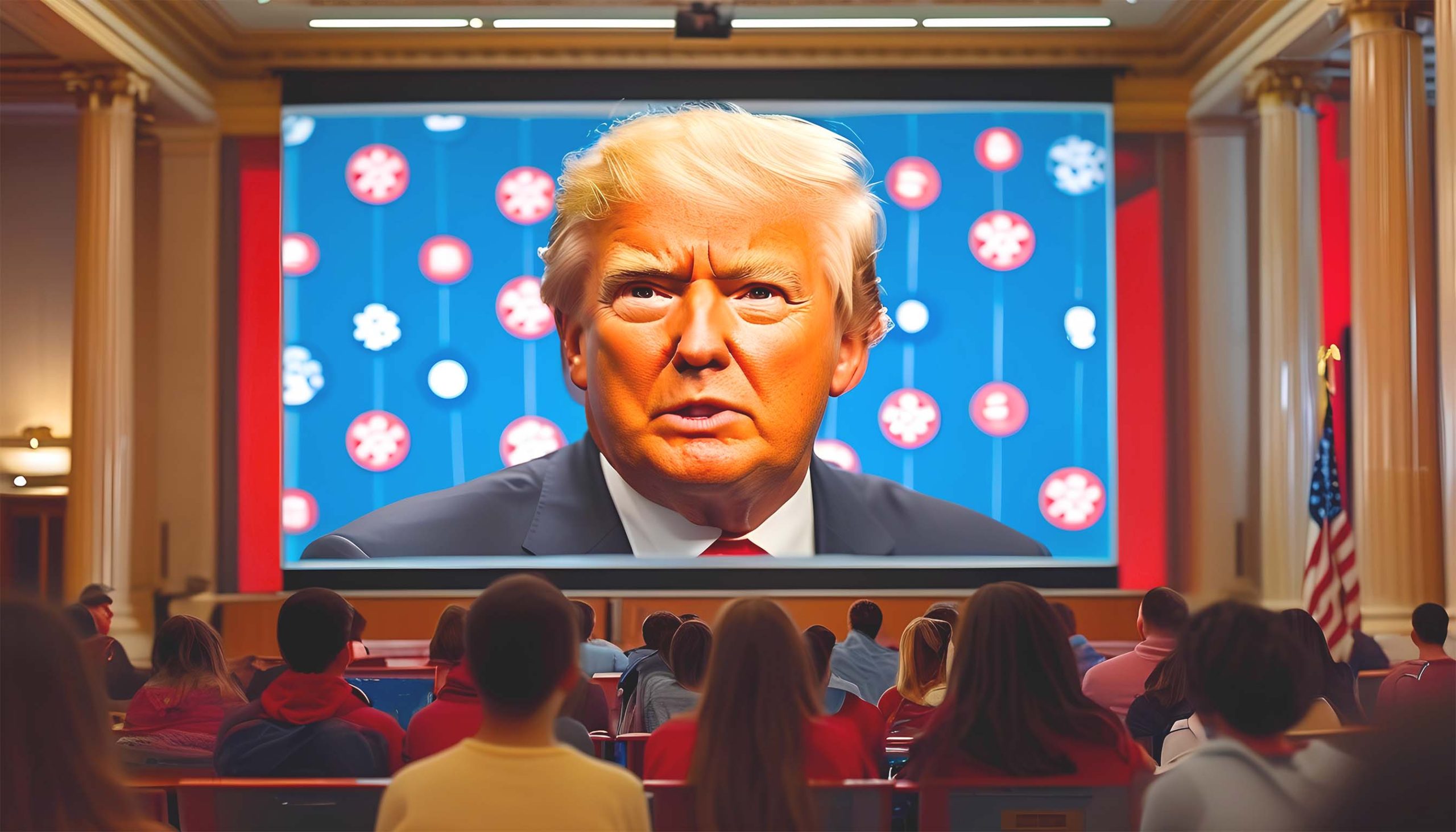
Table of Contents
Impact of Donald Trump’s Re-Election on Global Education
The potential re-election of Donald Trump as President of the United States has sent ripples through the global education landscape. During his first term, his policies and rhetoric significantly impacted international students, leading many to reconsider the U.S. as a viable destination for higher education. According to a recent Keystone Education Group survey, 42% of prospective international students are now less inclined to choose the U.S., citing concerns over visa restrictions, safety, and a less welcoming political climate.
Nevertheless, Donald Trump’s possible return to the White House in 2024 raises questions about its impact on Indian tech workers and students. Despite his stringent immigration policies in the past, experts believe his renewed focus on economic revival might create new opportunities. Indian IT service companies and STEM students, in particular, could benefit from merit-based immigration reforms, provided these policies align with Trump’s broader economic goals.
Declining Interest in U.S. Education Among International Students
The impact of Donald Trump’s presidency is evident in the declining interest in U.S. graduate programs. According to Keystone’s report:
- Between October 30 and November 6, 2024, student searches for U.S. Master’s and PhD programs dropped by 5%.
- Overall interest in U.S. educational programs declined by 3%.
- North American students showed the steepest drop, with a 17% decline in their consideration of U.S. institutions.
- Indian students pursuing STEM courses remain optimistic about improved visa policies, with the US being their top destination.
- Despite concerns about policy shifts, the Optional Practical Training (OPT) program continues to attract graduate students.
- Some schools, like the University of Massachusetts Amherst, have advised international students to return before potential policy changes under Trump 2.0.
- Students such as Yewon You (South Korea) and Rachel Syuen (Malaysia) express concerns about visa uncertainties but remain hopeful about new opportunities.
Regional Variations in Interest Levels
European students were particularly affected by these concerns, with 58% reporting a reduced interest in pursuing education in U.S. institutions. This shift may be attributed to ongoing uncertainties regarding immigration policies, including stricter visa regulations and travel bans that were implemented during Trump’s first term. Additionally, the perception of an unfriendly political environment in the U.S. under his leadership has contributed to European students’ hesitancy.
Similarly, students from other regions have also expressed caution. 21% of Asian students and 29% of African students shared similar sentiments, with many feeling that U.S. policies may undermine their opportunities for studying and working in the country. These students often face additional barriers, including visa challenges and concerns over racial tensions, which further deter them from considering U.S. institutions.
Despite these setbacks, Donald Trump’s potential return to the White House in 2024 raises questions about how it might impact Indian tech workers and students. While his first term saw a tough immigration stance, experts suggest that his renewed focus on economic revival could open doors for skilled Indian workers and STEM students. Merit-based immigration policies, designed to attract high-skilled talent, might align with Trump’s broader economic goals and provide new opportunities for Indian IT services companies and aspiring students in science, technology, engineering, and mathematics fields.
Rising Popularity of Alternative Study Destinations
As the U.S. loses its dominance, other countries are emerging as attractive alternatives for international students. Key destinations include:
- Sweden (+37%)
- Finland (+36%)
- Singapore (+30%)
- New Zealand, Czechia, and Italy have also seen a surge in interest due to progressive political environments and inclusive visa policies.
| Country | %-Increase In Interest |
|---|---|
| Sweden | 37 |
| Finland | 36 |
| Singapore | 30 |
| New Zealand | 29 |
| Czechia | 28 |
| Italy | 25 |
| UK | 19 |
| Spain | 19 |
A Look Back: U.S. Education Under Trump’s First Term
Before Donald Trump’s presidency, the U.S. experienced steady growth in international student enrollments, peaking at 1.08 million in 2016/17. However, his administration marked the first enrollment decline in 12 years, as highlighted by the 2017 Open Doors report. Contributing factors included:
- Stricter visa policies
- Reduced scholarships from countries like Saudi Arabia and Brazil
- Global political uncertainties
Shifts in U.S. Students’ Study Abroad Preferences
Key Policies and Actions Impacting International Students
- Immigration and Visa Restrictions: The 2017 travel ban targeted several Muslim-majority countries, complicating visa processes and deterring students.
- Anti-Immigrant Rhetoric: Trump’s “America First” policies fostered a perception of hostility, making students feel unwelcome.
- OPT and H-1B Visa Challenges: Restrictions on work visas reduced long-term career prospects for international students.
- Termination of Study Abroad Agreements: Reduced collaboration between U.S. and foreign universities limited opportunities for exchange programs.
- STEM and Talent Retention as a Focal Point : Trump’s promise of automatic green cards for college graduates could significantly impact the retention of high-skilled talent, particularly from India. Programs like OPT remain a crucial bridge for international students transitioning to the workforce.
Key Perspectives from Industry Experts
- Narayanan Ramaswamy (KPMG): The US economy’s demand for skilled immigrants could favor India, particularly in comparison to China. However, the real impact will depend on future economic conditions.
- Akshay Chaturvedi (Leverage.biz): Trump’s “clarity” on immigration may boost international student policies while tightening borders against illegal immigration.
- Madhur Gujar (Amber): Proposals for automatic green cards and a merit-based system could positively influence Indian students’ prospects.
Future Implications for U.S. Higher Education
If restrictive immigration policies persist under a potential second term of Donald Trump, the U.S. risks diminishing its longstanding appeal as one of the world’s top destinations for higher education. International students, particularly those from countries facing challenging visa processes or heightened scrutiny, may increasingly look elsewhere for academic opportunities. In addition to immigration challenges, ongoing concerns over safety, political instability, and the overall climate for foreign nationals could further discourage students from choosing the U.S. for their studies.
As a result, countries offering more politically stable and inclusive environments are positioned to attract a growing share of international students. Nations like Canada, Australia, and several European countries have already benefitted from U.S. policies that some students perceive as unfriendly, particularly when it comes to immigration. These countries offer more favorable visa options, welcoming policies, and pathways to permanent residency for international students, which are becoming increasingly important factors in students’ decision-making processes.
This shift in preferences poses a significant challenge to the U.S., which has historically been the global leader in attracting international talent. While American institutions still provide world-class education, the competitive edge of U.S. universities may begin to erode if prospective students increasingly opt for destinations that prioritize inclusivity, safety, and opportunities for post-graduation employment. To maintain its dominance in global higher education, the U.S. may need to reconsider its immigration and visa policies, ensuring they are aligned with the needs and concerns of international students in an increasingly interconnected and competitive world.
References
Popular Right Now !

My Path to Success in Data Science
My journey into data science and analytics began with R programming, a powerful language widely. .

Inflation and Unemployment in India: Insights and Analysis
Recent government estimates indicate that the unemployment rate in India increased to 5.4% in the fiscal year. .
Thank you Sir for sharing. I am worried that I lack creative ideas. It is your article that makes me full of hope.But, I have a question, can you help me?