If you found this article useful, please consider subscribing to our YouTube channel and sharing this post on social media. All posts are regularly updated and closely monitored by our Highly Qualified Editors, ensuring you get genuine and up-to-date news. We do not engage in fake news or advertisements. We are a Student-First Startup.
Inflation and Unemployment in India: Insights and Analysis

Table of Contents
Youth Unemployment: A Growing Concern
Recent government estimates indicate that the unemployment rate in India increased to 5.4% in the fiscal year ending March 2023, up from 4.9% in 2013/14. The unemployment rate is higher in urban areas, reaching 6.5%.
Data from the Centre for Monitoring Indian Economy (CMIE) shows that the jobless rate rose to 8% in February 2024.
Unemployment remains a significant concern, with many experts noting a lack of improvement in the overall employment scenario. There is particular worry regarding the high youth unemployment rate, as nearly 16% of urban youth aged 15-29 were jobless in 2022-23 due to inadequate skills and a shortage of quality jobs. Estimates from private agencies, such as the CMIE, suggest that the youth unemployment rate could be as high as 45.4%.
Relation between Inflation & Unemployment
Inflation and unemployment usually have an opposite relationship, but it’s quite complex. When unemployment is high, wages tend to stay the same, and there’s little to no wage inflation. Conversely, in a low unemployment environment, employers often have to raise wages to attract workers, which leads to wage inflation.
During periods of high unemployment, many people are seeking jobs, far outnumbering the available positions. This means that the supply of labor exceeds the demand. In such situations, employers don’t need to offer higher wages to find employees, resulting in stagnant wages and minimal wage inflation.
On the other hand, when unemployment is low, the demand for workers surpasses the available labor supply. In these tight labor markets, employers compete for employees by increasing wages, which contributes to rising wage inflation.
Another important factor influencing wage changes is the overall economic situation. In a thriving economy, employers are likely to offer better pay to attract workers, increasing the demand for labor more rapidly than in a slow-growing economy.
Since wages are a significant cost for businesses, higher wages generally lead to increased prices for goods and services, contributing to overall inflation. This connection between price inflation and unemployment is illustrated in the Phillips curve, a concept that graphically represents their relationship.
Impact of Inflation on the Job Market
Inflation can trigger a recession. When prices rise excessively and wages do not keep pace, consumers tend to reduce or stop their spending. This decline in consumer spending can hurt businesses, leading to decreased revenue. As a result, companies may be forced to lay off employees, which raises unemployment rates. This cycle continues as more individuals have less money to spend, further slowing down the economy.
High economic growth v/s insufficient jobs
A math graduate from Kanpur in Uttar Pradesh applied for a low-level government job last year. Despite the position’s limited requirements, there was fierce competition, with over 80,000 applicants, many of whom held postgraduate degrees.
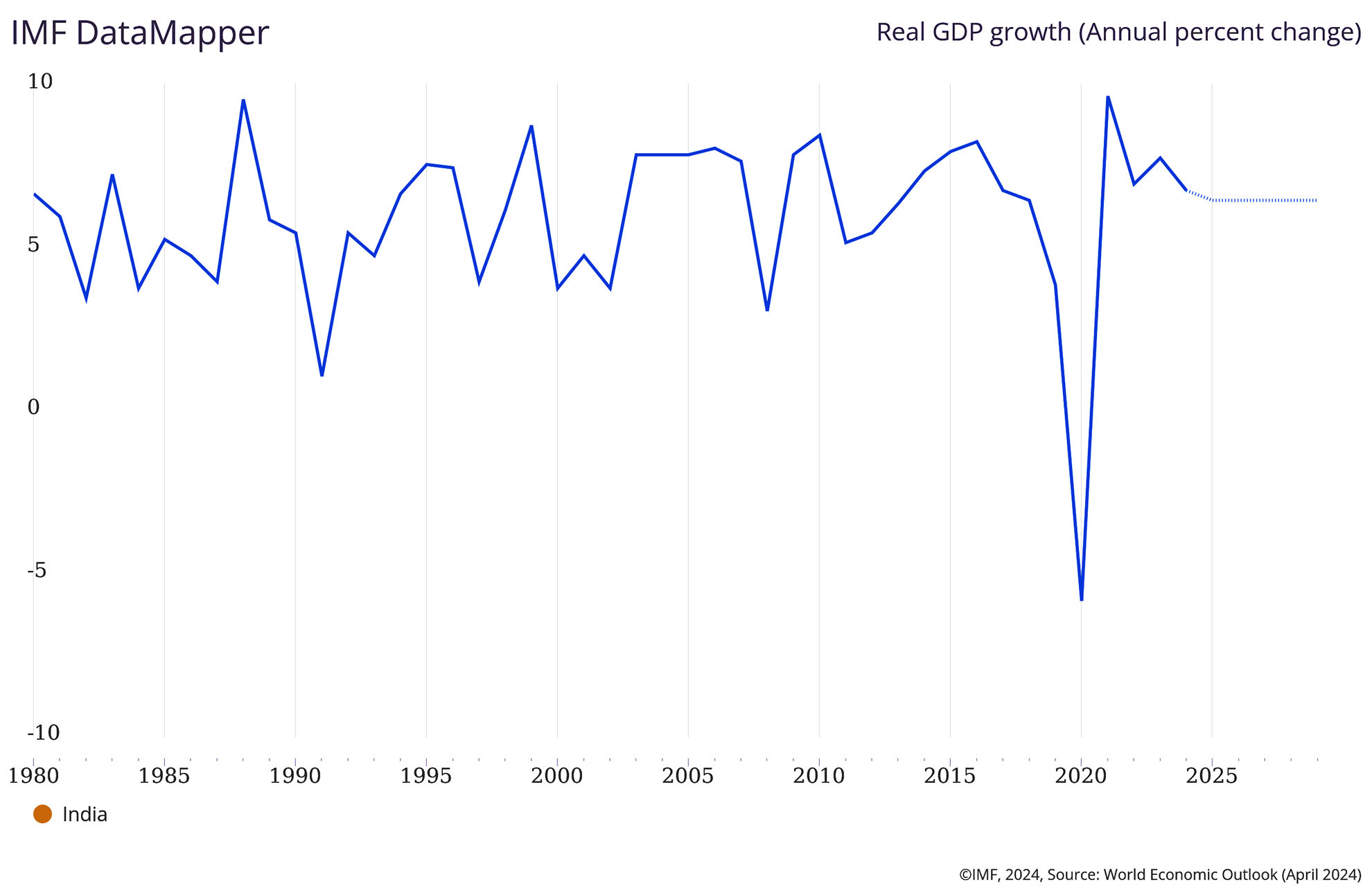
Many young people across India find themselves in similar situations. Although the Indian economy is growing rapidly, expanding by 8.4% in the fourth quarter of 2023, it struggles to create sufficient job opportunities for the millions of young Indians entering the labor market each year.
A contributing factor to this issue is the growth of the services sector over the past few decades, which is less labor-intensive compared to the manufacturing sector. Inclusive growth requires providing jobs rapidly at the bottom of the pyramid, not only at the top of the wage and skill distribution.
Unemployment remains a persistent challenge in India, even among college graduates. There is a significant mismatch between skills and job expectations, with new jobs often emerging in sectors like agriculture and construction, which do not align with the qualifications of the educated workforce.
The India Employment Report 2024 presents a concerning overview of employment conditions in the country. It notes that the youth make up nearly 83% of the unemployed workforce, and the proportion of unemployed individuals with secondary or higher education has nearly doubled from 35.2% in 2000 to 65.7% in 2022.
Youth unemployment rates in India are now higher than the global average, indicating that the Indian economy has failed to generate adequate remunerative jobs in non-farm sectors for the newly educated youth entering the labor force. This failure is reflected in the persistently high and increasing unemployment rate.
Market Challenges in India
Despite improvements in unemployment rates, significant challenges remain in the Indian job market.
Job Mismatch and Underemployment
Lack of Research and Development Opportunities
Economic Slowdown and Global Factors
Economic Insights: Growth and Public Perception
A recent survey shows that about 67% of urban Indians believe the country is moving in the right direction. However, the real GDP growth slowed to 6.7% in the April to June 2024 quarter, the lowest in five quarters, and below expectations.
A report indicated that a decrease in government spending negatively impacted GDP growth. Limited growth in net taxes also affected the overall GDP, despite a 7% growth in manufacturing, which was slower compared to the previous quarter. While agriculture and services saw improvements, the growth in agriculture was modest, capping the overall GDP rise.
Despite facing natural disasters and global challenges, there remains confidence among citizens about the country’s progress and direction.
References
Popular Right Now !

UGC Revolutionizes U.G Education with Flexible Degree Completion Norms
The University Grants Commission (UGC) is set to revolutionize higher education in India by introducing flexible. . . .

Why Layoffs Happen and What Students Can Do to Stay Ahead
Layoffs occur when companies reduce their workforce to cut costs or adjust to lower demand.

Why is Europe Becoming a Prime Destination for International Students?
In recent years, Europe has become a highly sought-after destination for students worldwide. .